





FAW Trucks Uzbekistan 2026: A Practical Guide to Tiger V, J6P and JH6 Models
Faw Trucks | China Faw Jiefang Group
Market Presence and Service Network: Why FAW Is a Different Proposition in Uzbekistan
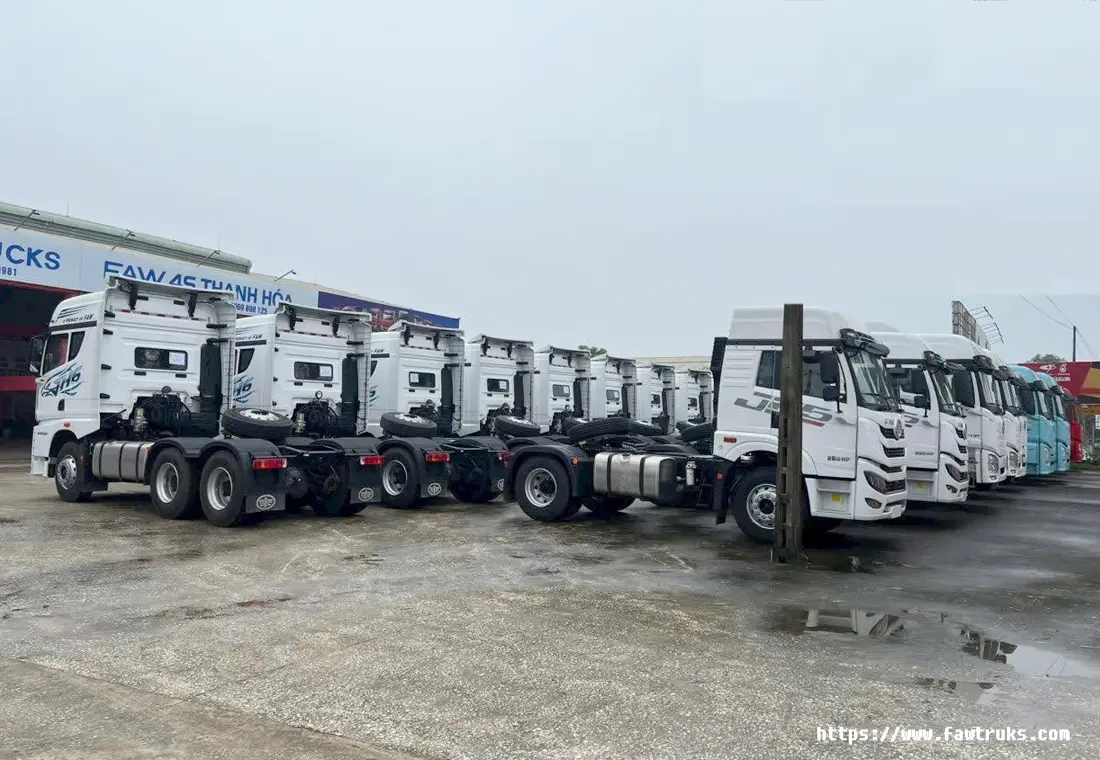
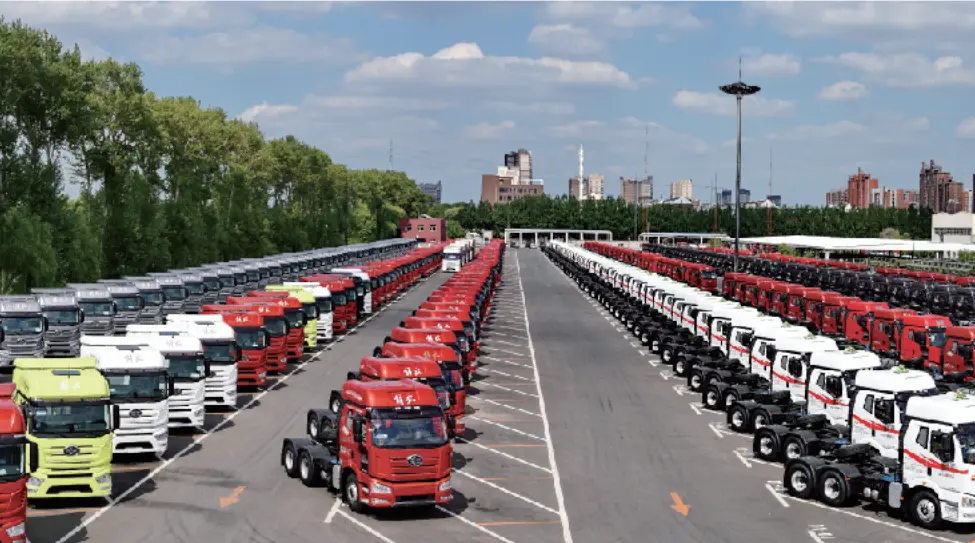
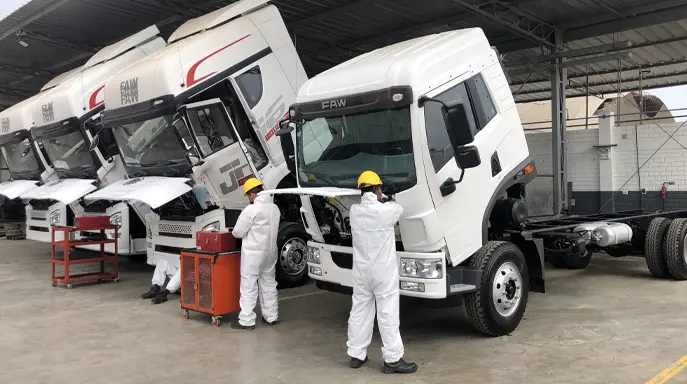
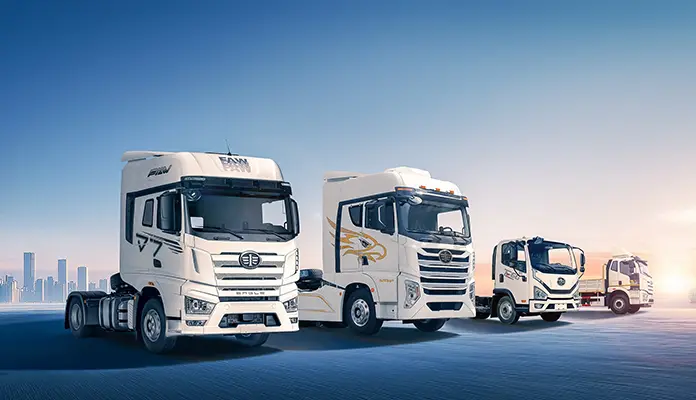
The most important structural fact about FAW in Uzbekistan is the maturity of its local support ecosystem. Through authorized local assembly initiatives and strategic regional partnerships, FAW has built a dealer and service network that continues to expand rapidly across the country. Large fleet operators, state infrastructure organizations, and major retail chains rely on these vehicles daily. That matters for practical reasons: these are not anonymous claims on a brochure — they reflect trucks operating in real Uzbek mining, construction, and logistics conditions.
FAW Tiger V
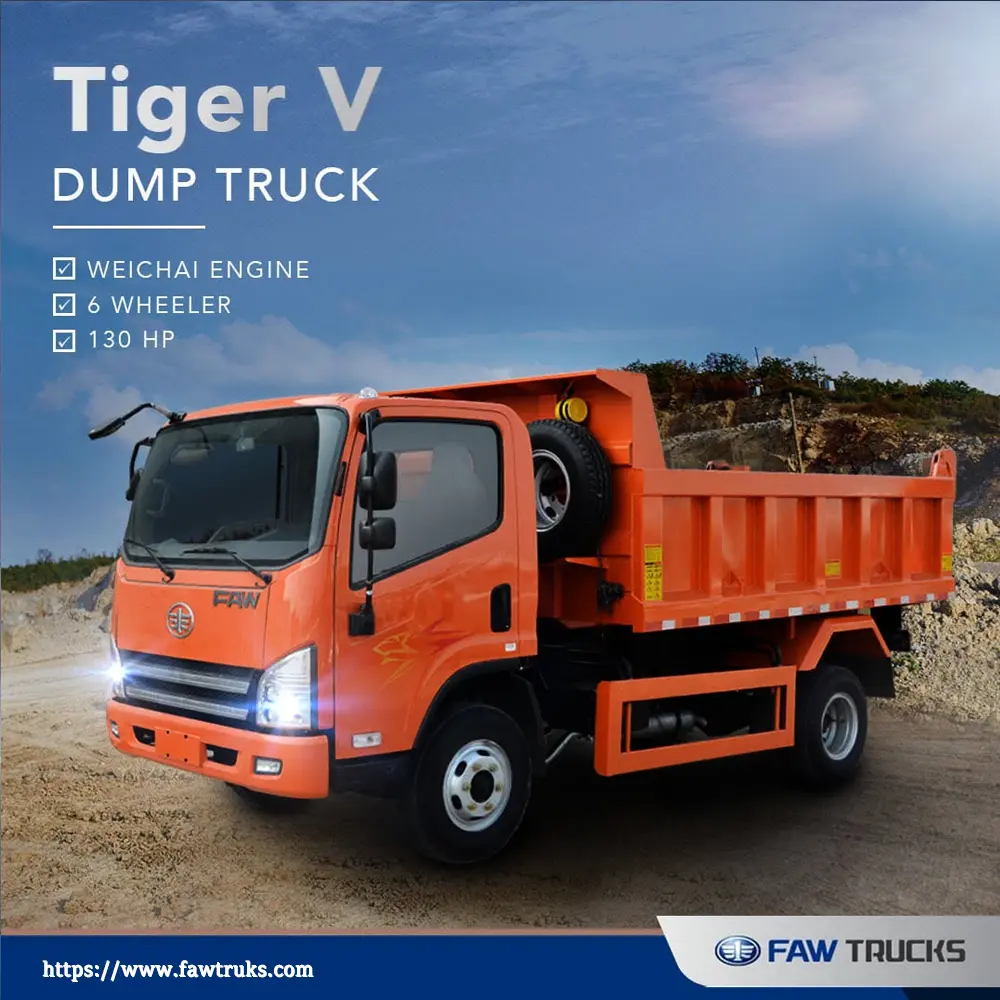
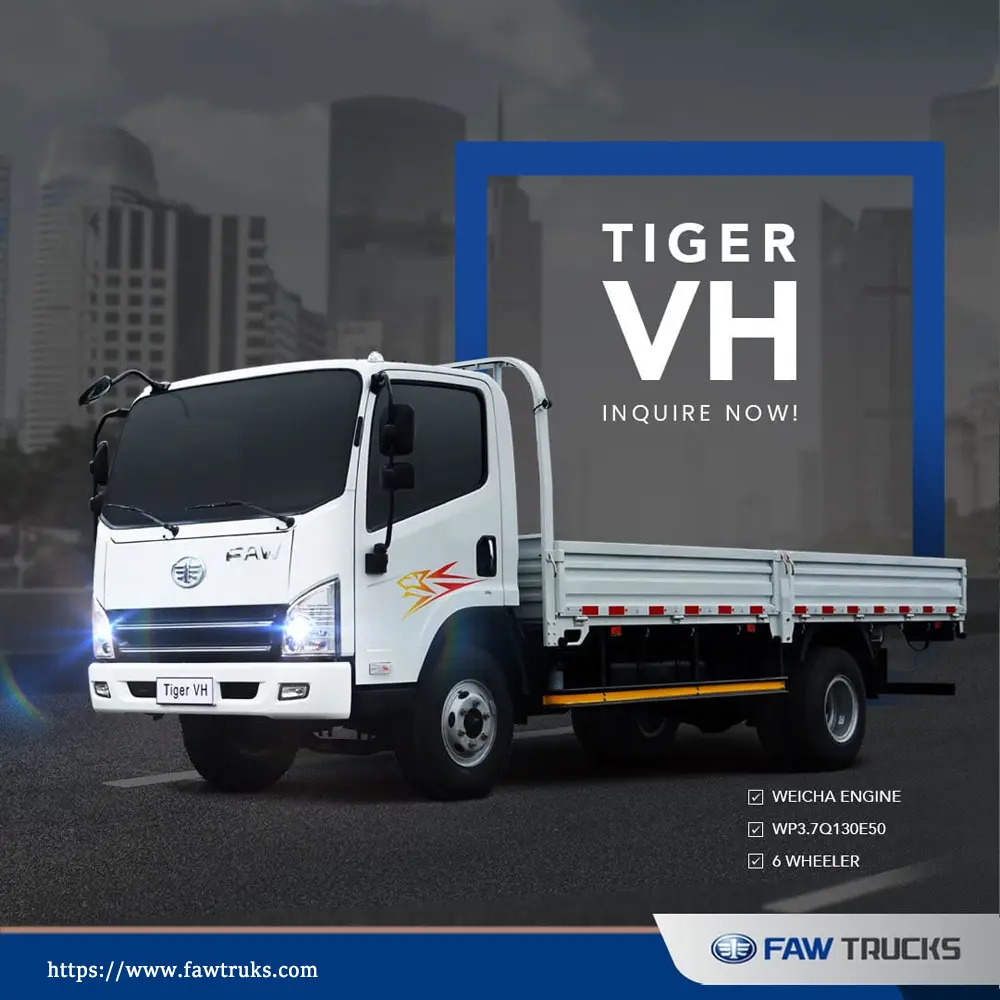
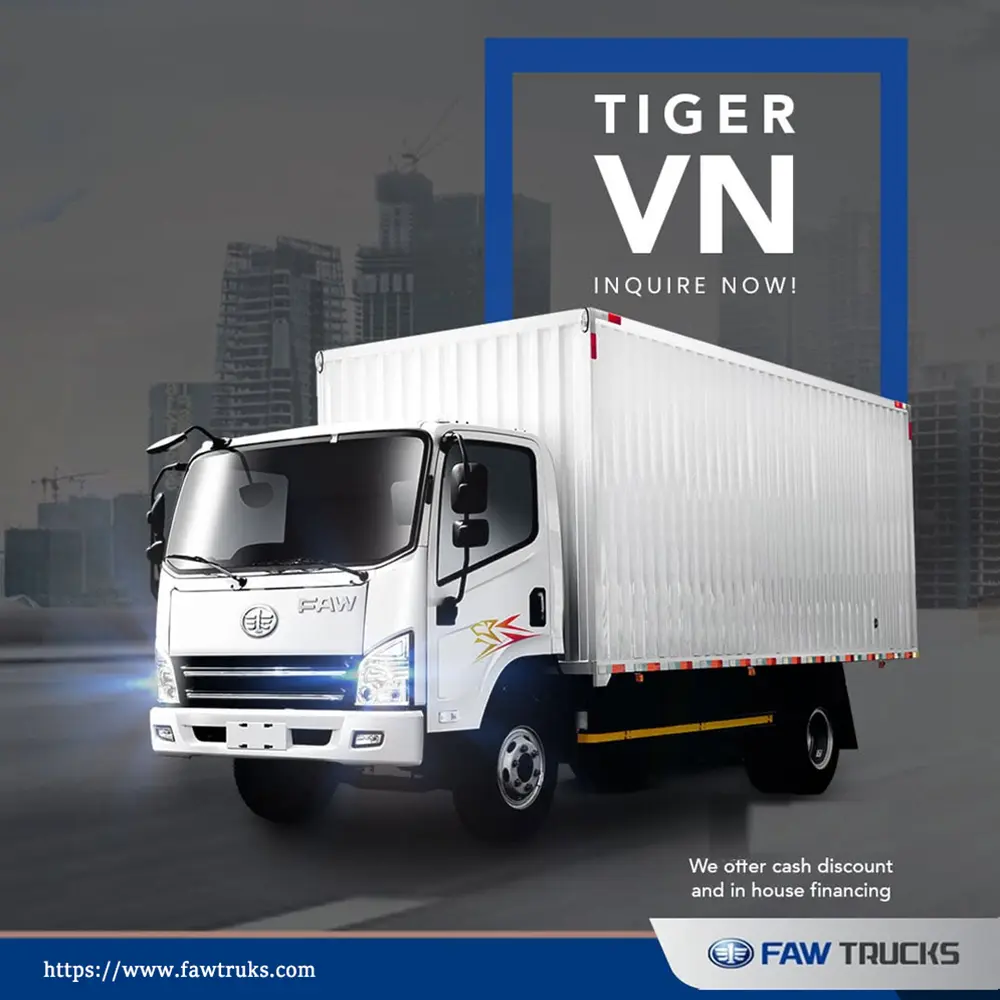
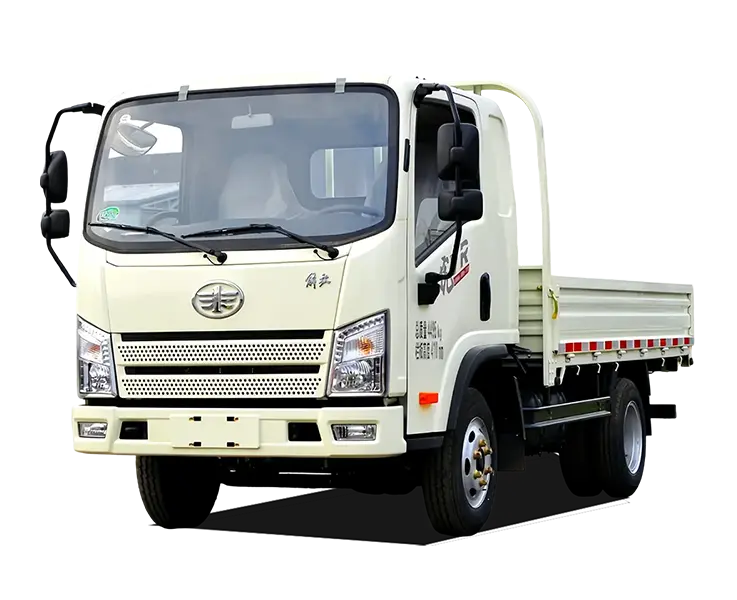
FAW Tiger V and Tiger VH: The Light-Duty Backbone of Uzbek Urban and Regional Distribution
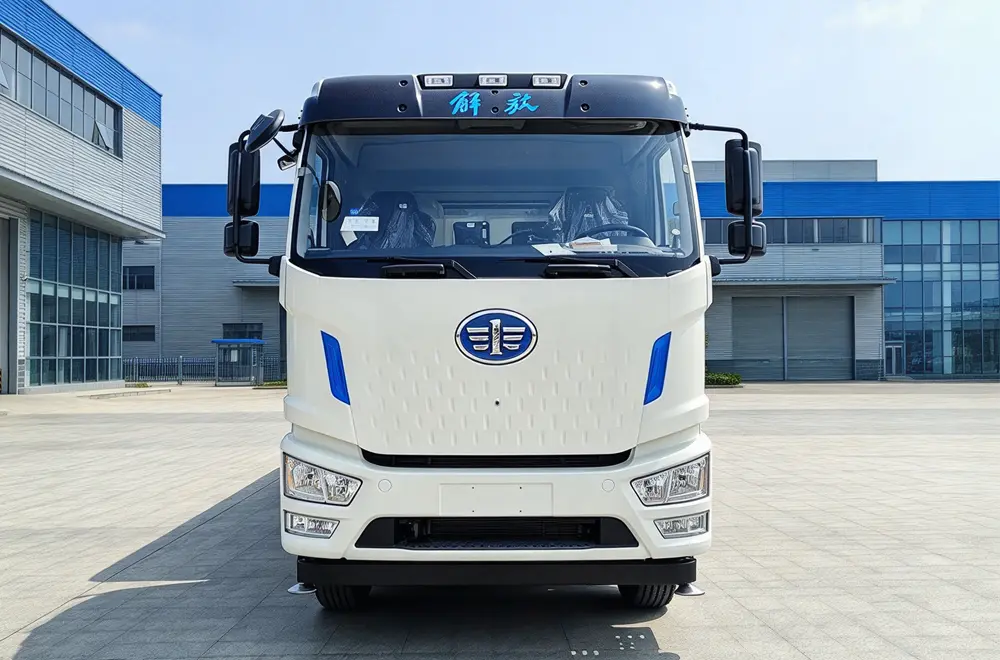
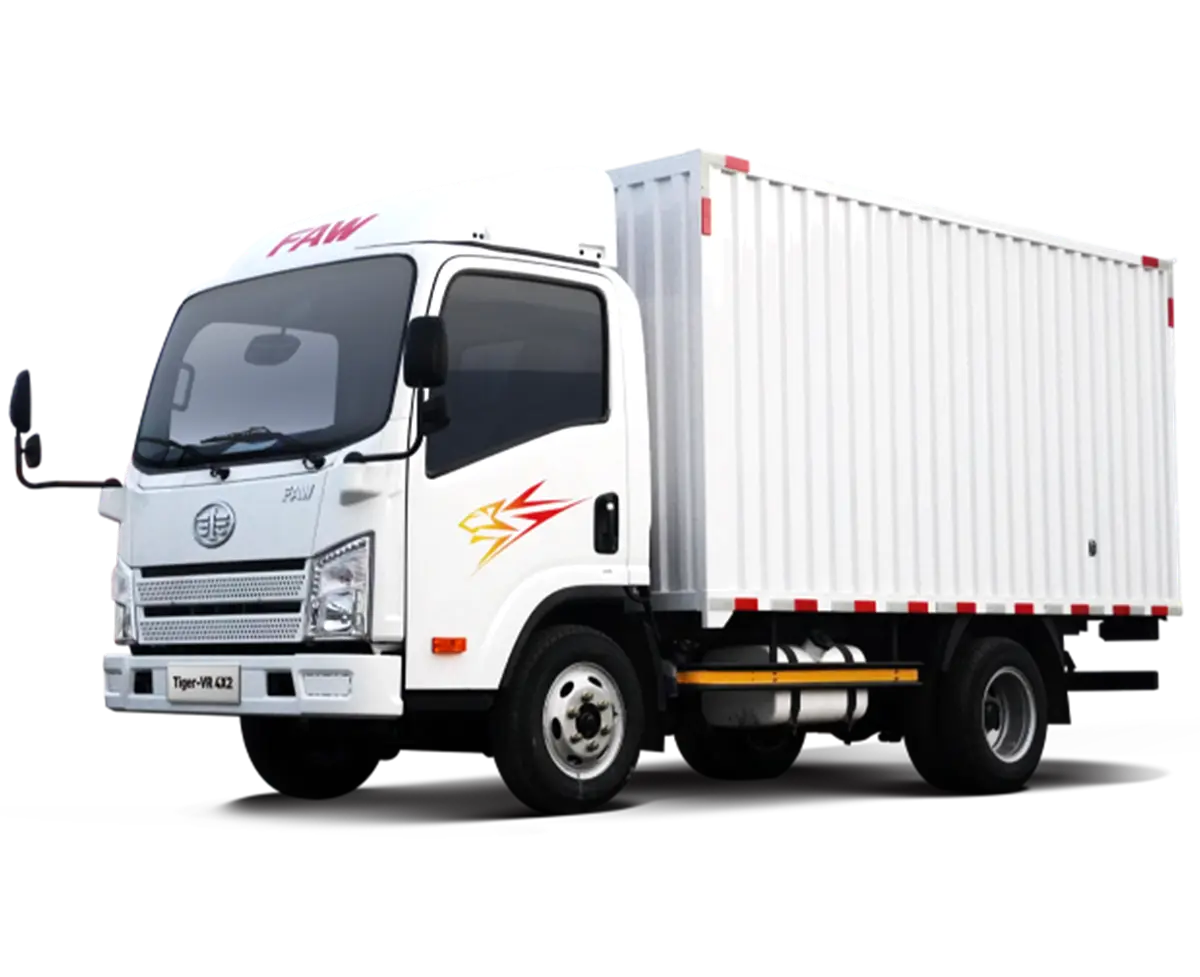
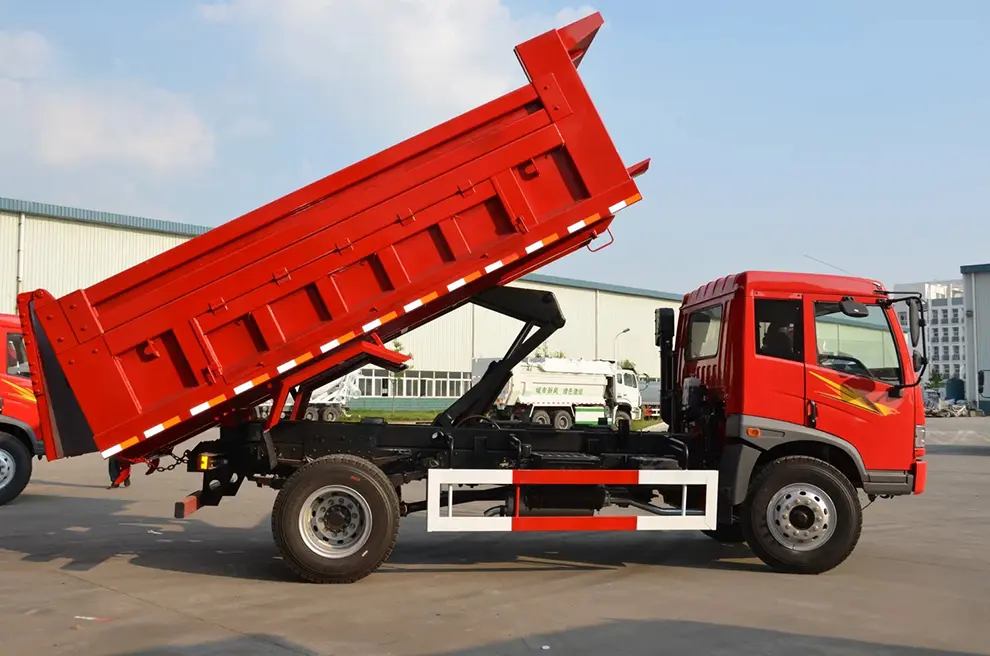
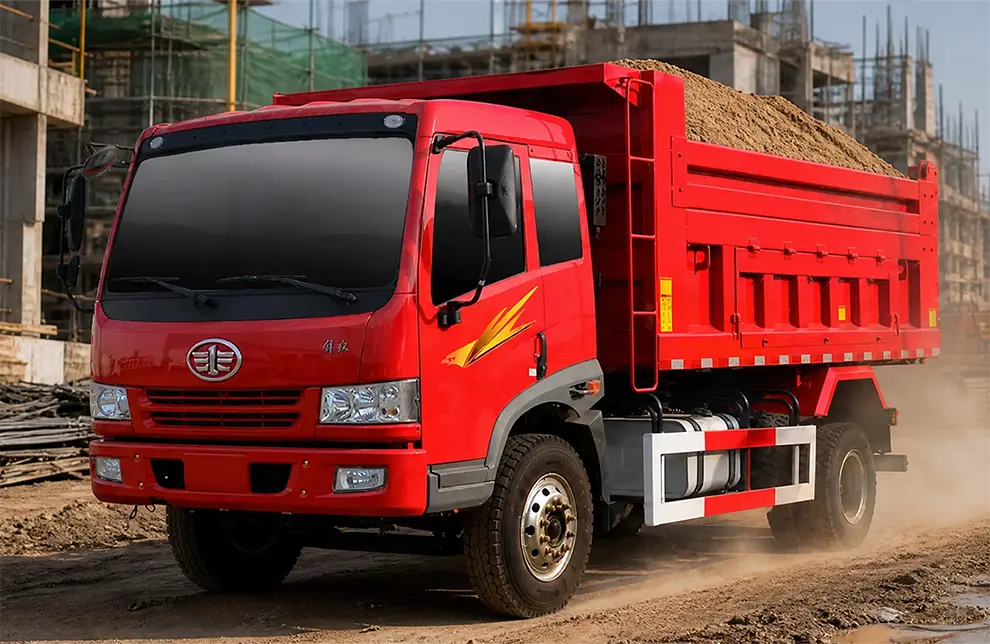
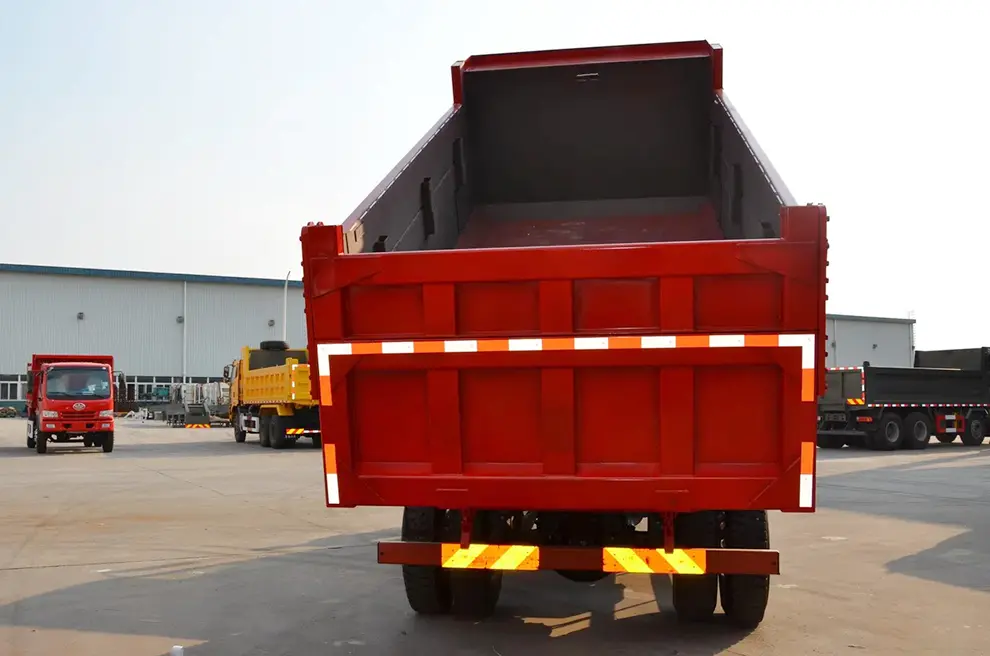
The Tiger V family is the volume model for light-duty commercial work in Uzbekistan — urban delivery, municipal service, construction material transport, and agricultural logistics. The range includes chassis-cab, box body, refrigerator body, and tipper variants, with 4×2 and, more recently, 4×4 chassis options.
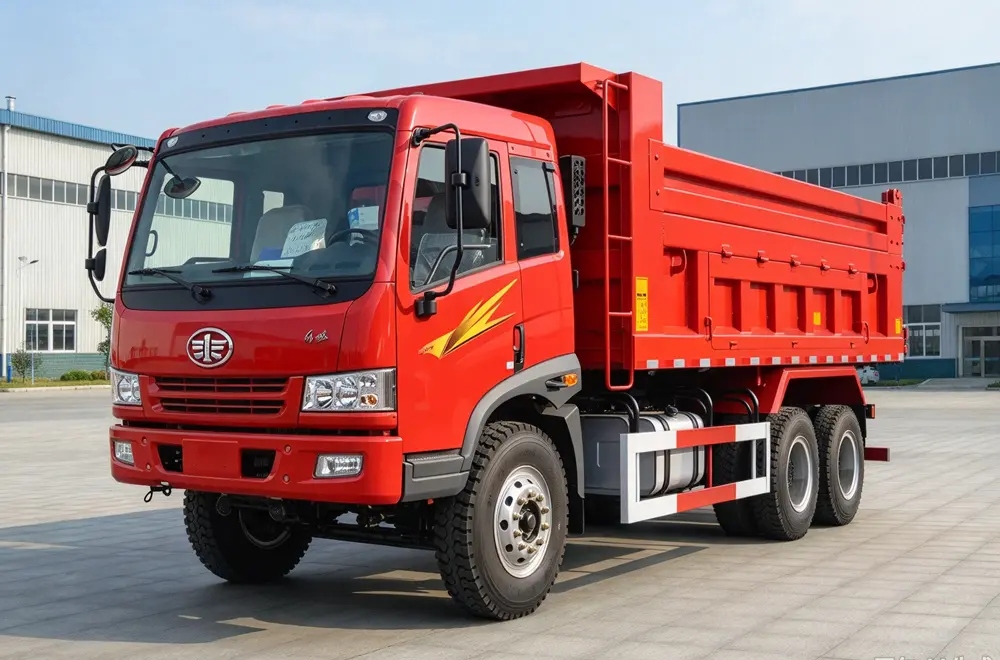
FAW Tiger V Tipper VUM3110: Configuration Relevant to Uzbek Light Construction
| Parameter | Tiger V VUM3110 Tipper |
| Body volume | 4 m³ |
| Payload | 5,000 kg |
| Body dimensions (L×W×H) | 3,800 × 2,100 × 500 mm |
| Engine | YUCHAI, 130 hp, Euro 3 |
| Transmission | WLY, 6-speed manual |
| Fuel | Diesel |
| Fuel tank | 100 L |
| Indicative price | from approximately 460,320,000 UZS |
Configuration data reflects the Tiger V VUM3110 tipper variant listed for the Uzbek market. Actual specifications and pricing should be confirmed with our export team.
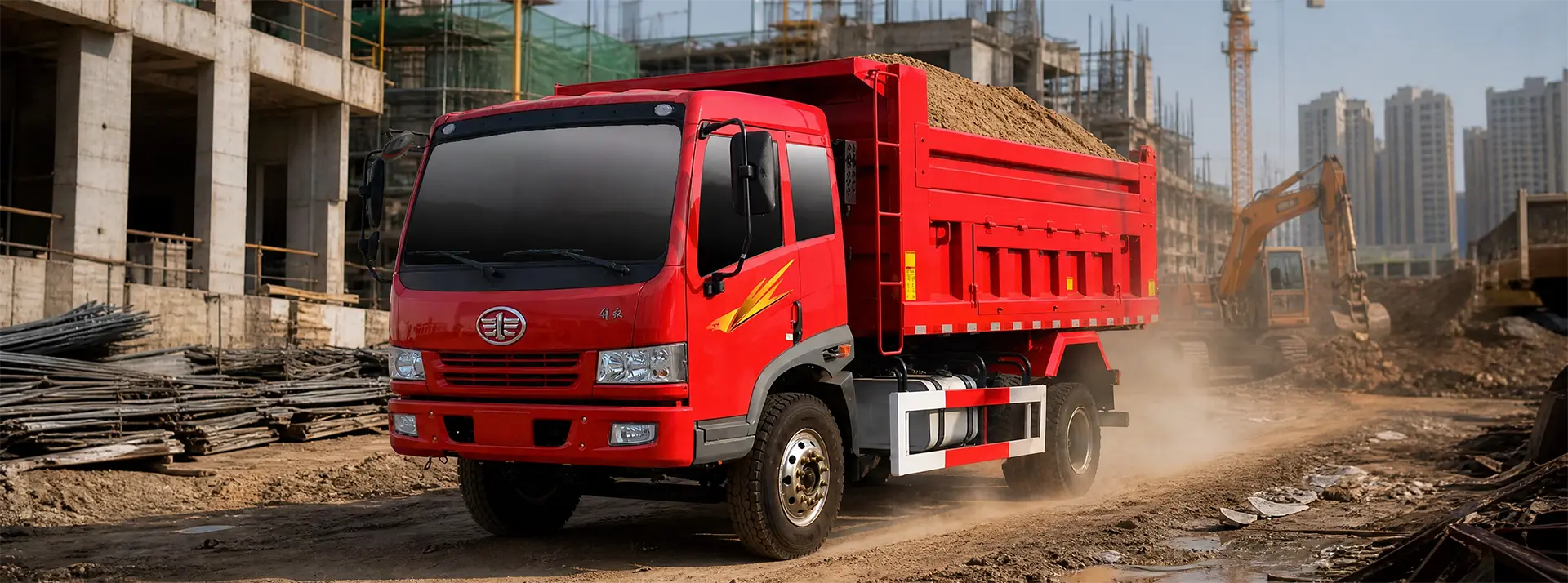
For a 4 m³ tipper, the Tiger V is aimed at municipal works, small-scale construction, landscaping, and intra-city material delivery where a full-size 6×4 tipper would be over-specified. The 130 hp YUCHAI engine and 6-speed WLY gearbox are a straightforward, highly serviceable combination — a major advantage in Uzbekistan where dealer coverage outside Tashkent is improving but still requires robust mechanical designs.
Faw Mini Dump Truck
FAW Tiger VH: Uzbekistan’s Factory-Built Gas–Petrol Truck
The Tiger VH deserves separate attention because it reflects a genuinely local adaptation rather than a generic export configuration. This model is offered as a factory-built gas–petrol truck, running on methane and petrol with a fuel system of 345 L methane + 15 L petrol, a YUNNEI 130 hp engine, and an 8-speed manual gearbox.
For Uzbek operators, the fuel economics are the point. Methane is significantly cheaper per kilometer than diesel in Uzbekistan, and a dual-fuel light truck allows fleet operators to run on gas for daily routes while retaining petrol range for longer or remote assignments. The Tiger VH is equipped with a 360° camera, multifunction steering wheel, pneumatic seat, and heated mirrors — features that matter for driver retention in a market where skilled drivers are scarce.
When the Tiger V / VH makes sense: Your loads are in the 2.8–5 ton range, your routes are urban or regional with predictable refueling points, and you want a truck that is officially supported locally with dealer service access rather than an independent import with uncertain parts support.
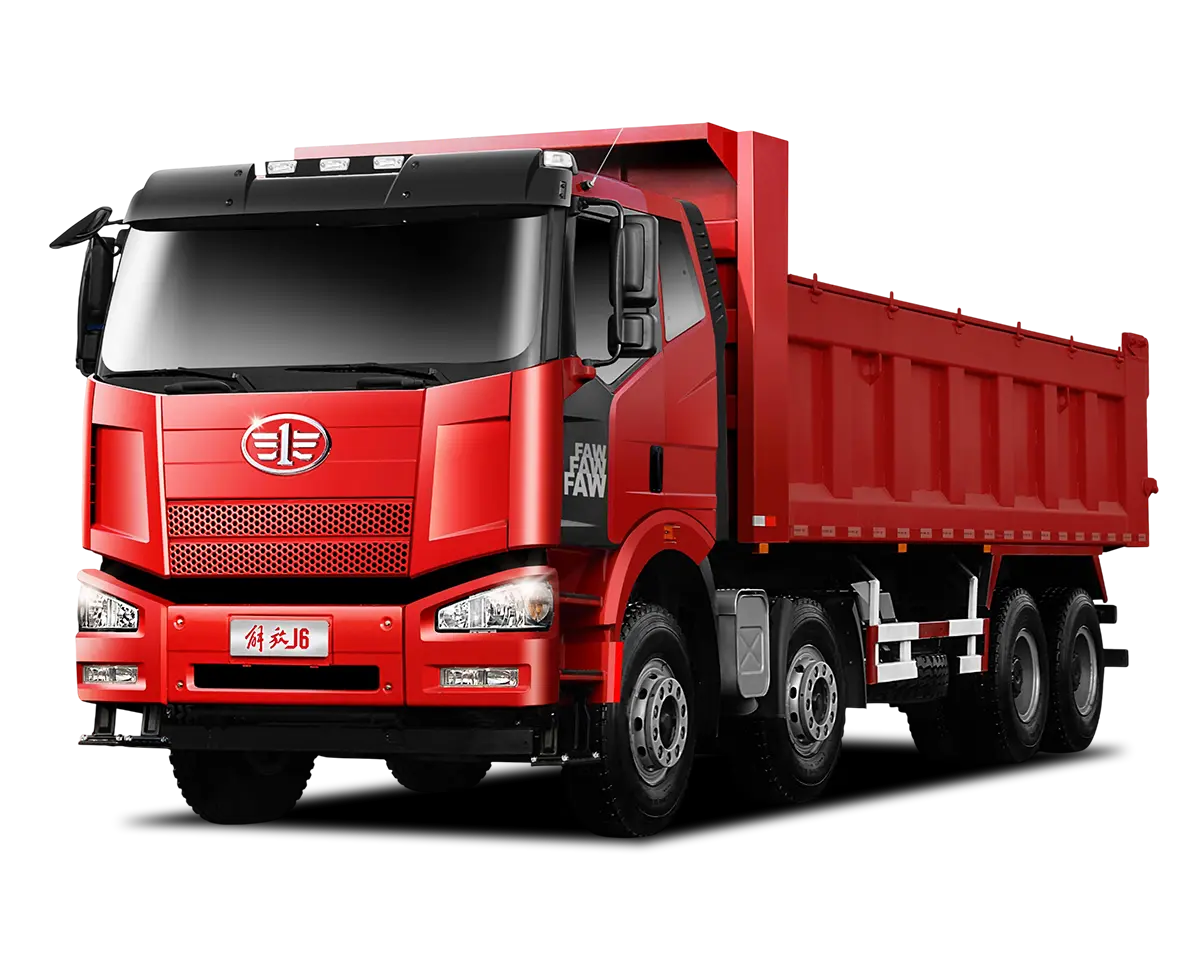
FAW J6P: The Heavy-Duty Tipper for Mining, Quarrying and Large Construction
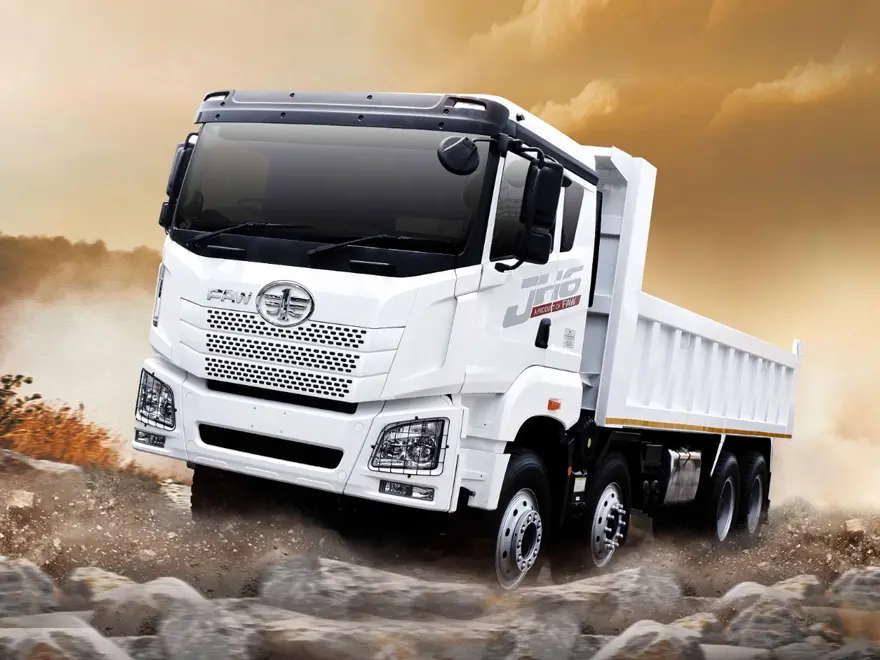
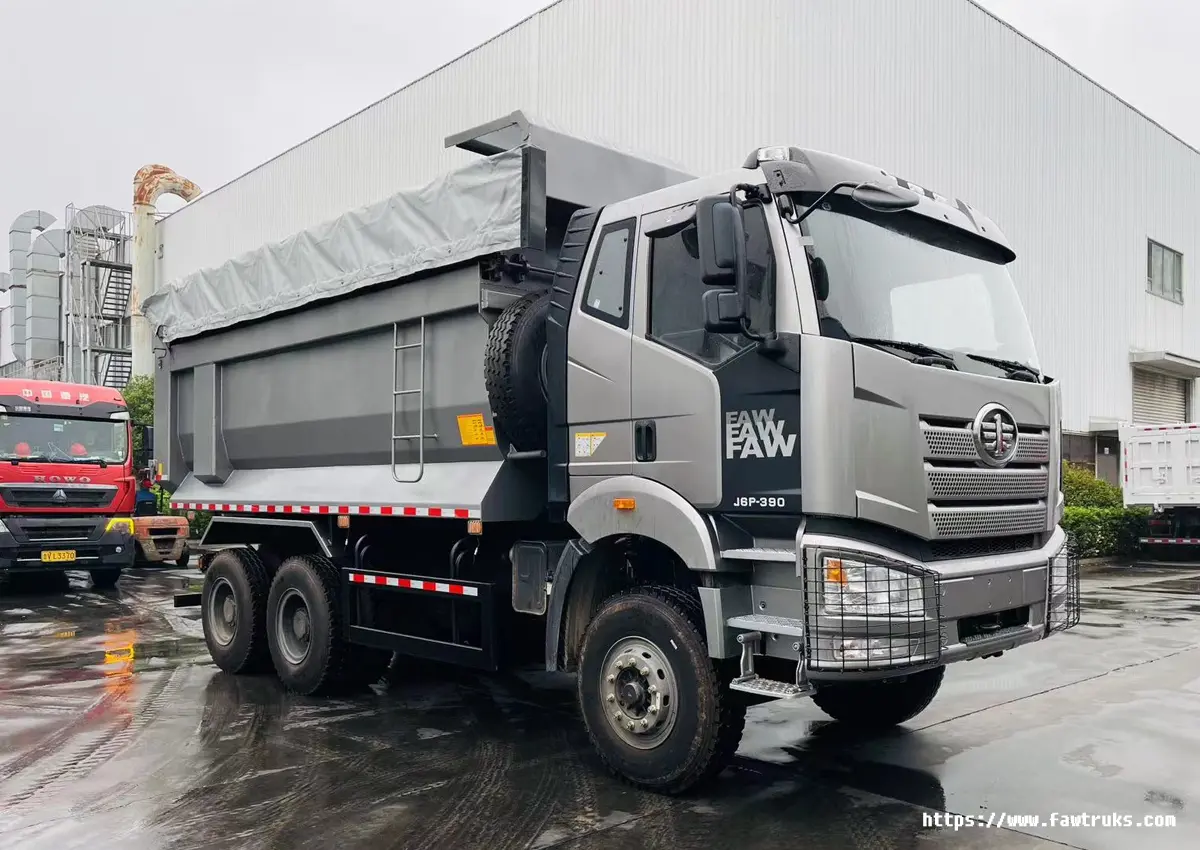
When the application moves to aggregate hauling, quarry output, coal, or construction material at 25–31 ton payloads, the relevant FAW model in Uzbekistan is the J6P. It is available in 6×4 and 8×4 configurations, with the 8×4 variant being particularly visible in Uzbek heavy tipper fleets.
Faw J6P truck
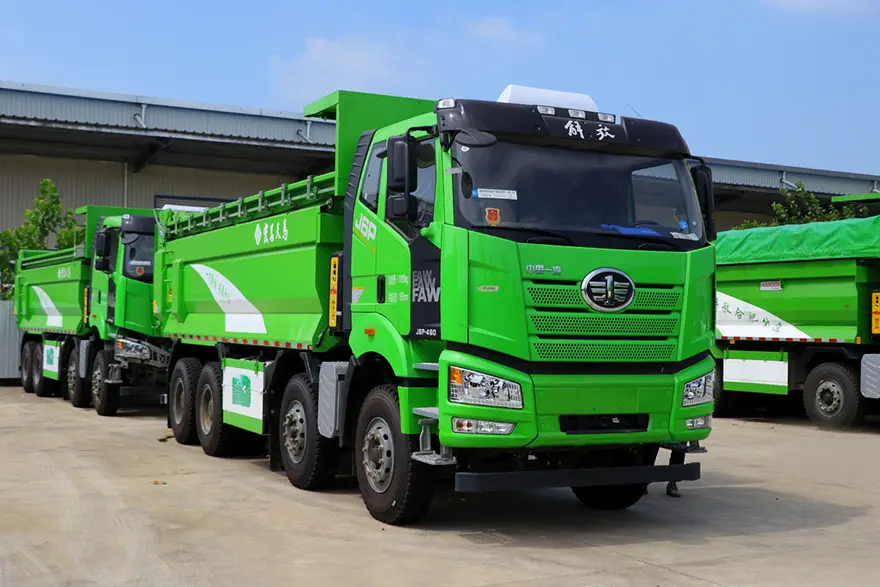
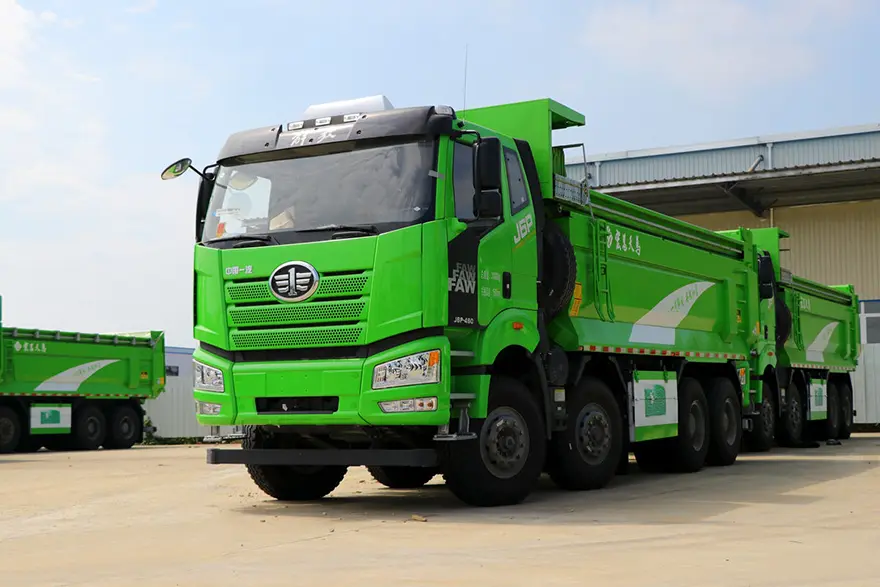
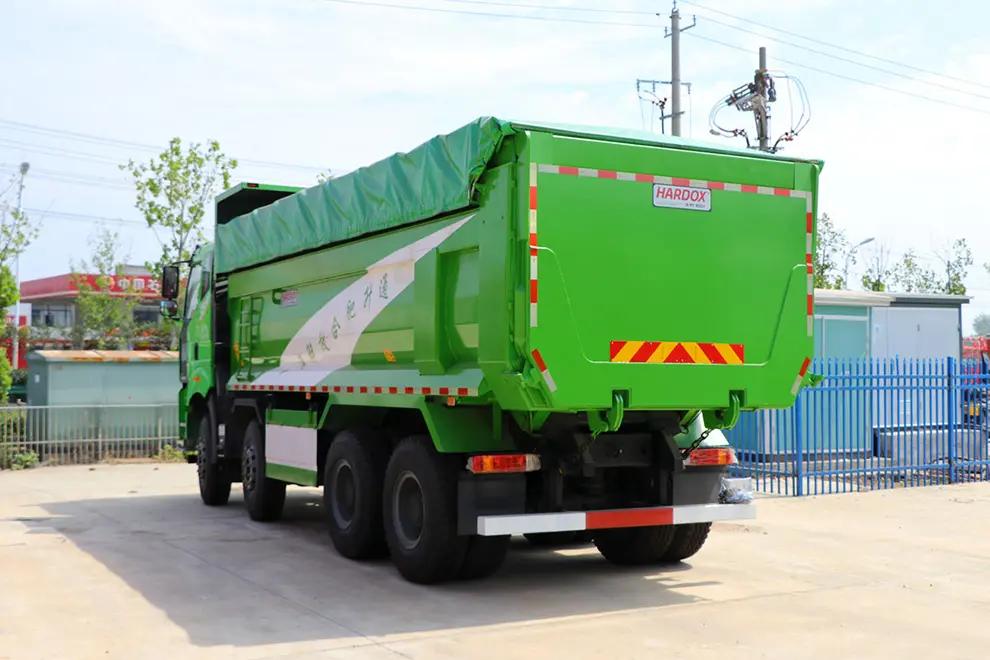
FAW J6P-420 8×4 Tipper: Configuration Documented for Uzbekistan
| Parameter | J6P-420 8×4 (CA3310P66K24L4T4AE5) |
| Drive type | 8×4 |
| Payload | 31,000 kg |
| Curb weight | 17,000 kg |
| Gross vehicle weight | 48,000 kg |
| Body volume | 26 m³ |
| Body dimensions (L×W×H) | 7,600 × 2,340 × 1,500 mm |
| Body material | Manganese steel; floor 8 mm, side 6 mm |
| Engine | Xichai CA6DM2-42E51, 6-cylinder diesel, turbo intercooled |
| Displacement | 11.05 L |
| Max power | 420 hp / 309 kW |
| Max torque | 1,900 N·m |
| Emission standard | Euro 5 |
| Transmission | FAW CA12TAX210M, 12-speed manual |
| Front axle / suspension | F7N / 2 × 7,500 kg, leaf spring |
| Rear axle / suspension | R16D300 / 2 × 16,000 kg, leaf spring |
| Tires | 12.00R20, 18PR, 12+1 |
| Fuel tank | 400 L + 40 L AdBlue |
| Cabin | Extended wide flat-roof cab, two seats, sleeper 620 × 2160 mm, air-conditioned |
Configuration data reflects the J6P-420 8×4 tipper variant documented for the Uzbek market.


The 420 hp Xichai engine with 1,900 N·m is the key figure for Uzbek conditions. On the long gradients of interregional haul routes or in quarry pit exits, torque reserve determines whether a loaded tipper maintains momentum or becomes a bottleneck. The 12-speed FAW transmission gives close ratios for loaded starts and a tall top gear for return runs. The manganese steel body — 8 mm floor and 6 mm sides — is a wear specification aimed at abrasive aggregate and ore, not just general construction debris.
The J6P is also listed in 6×4 form with a 350 hp engine option and an 8.6 L displacement, which suits operators who need heavy-duty capability but operate on routes where an 8×4’s tighter turning circle or higher tare weight would be a liability. A Euro 5 30-ton payload J6P configuration also appears in regional listings, confirming that the model is supplied across emission tiers appropriate to local fuel quality and registration requirements.
When the J6P makes sense: You are hauling 25–31 tons of aggregate, ore, coal, or construction material, your routes include unpaved quarry roads and significant gradients, and you need a heavy tipper that is officially supported with dealer-level parts and service rather than a grey import.
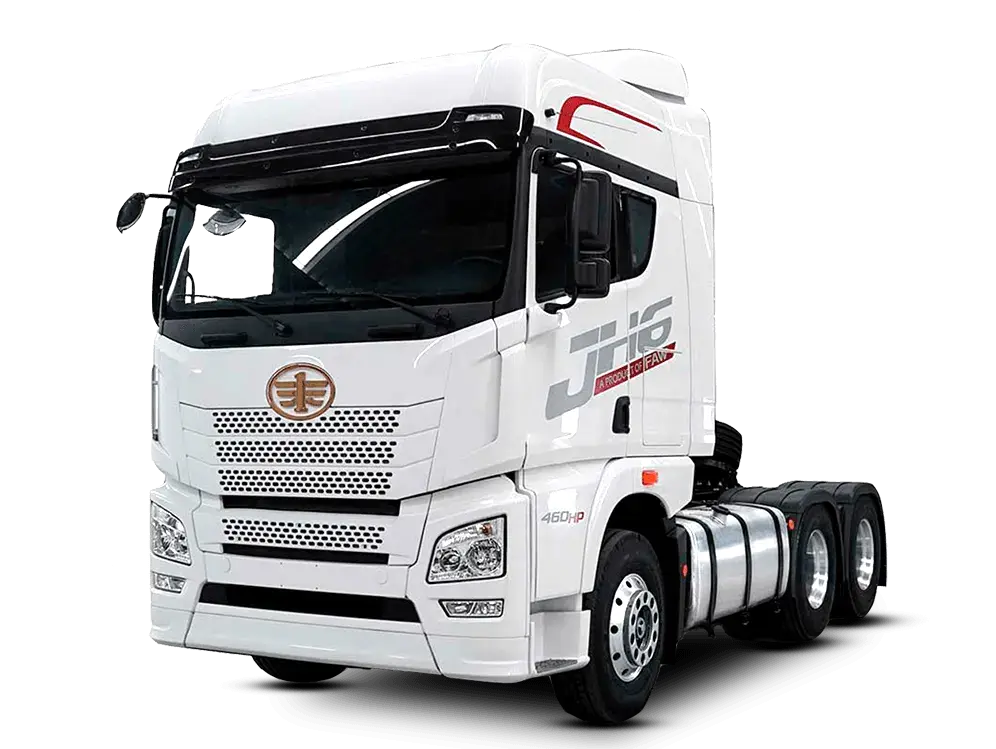
FAW JH6: The Long-Haul and CNG Option for Regional and Corridor Transport
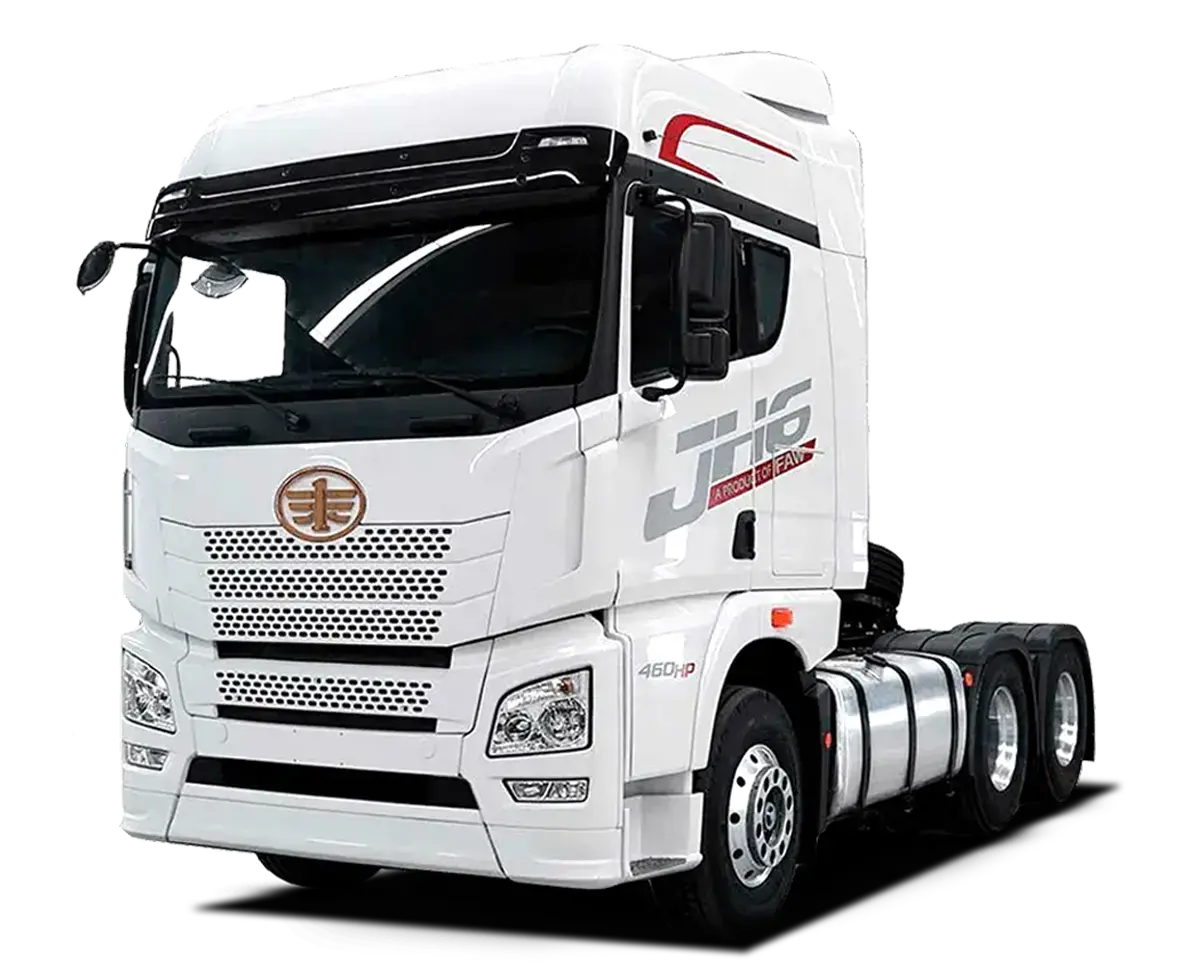
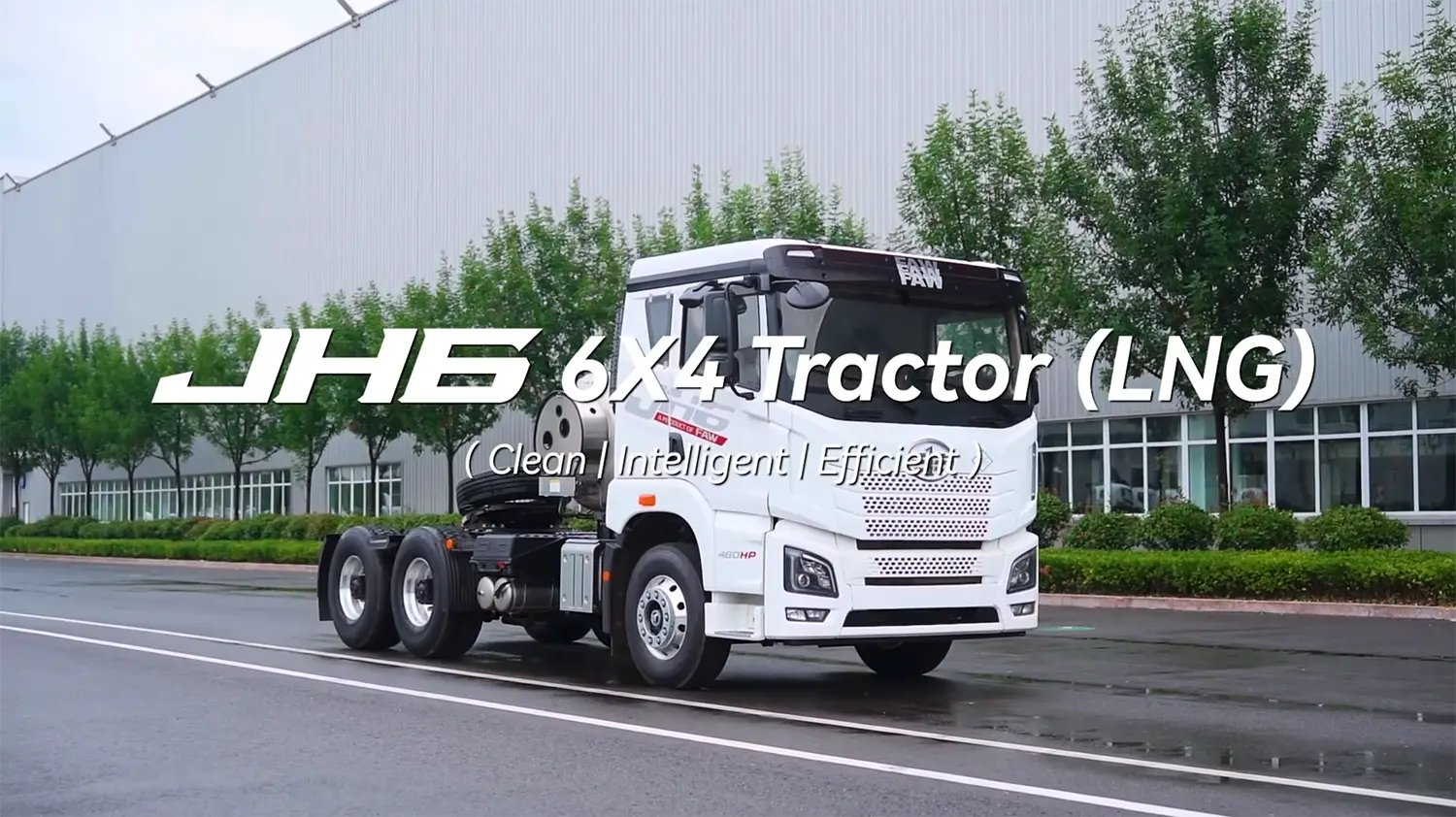
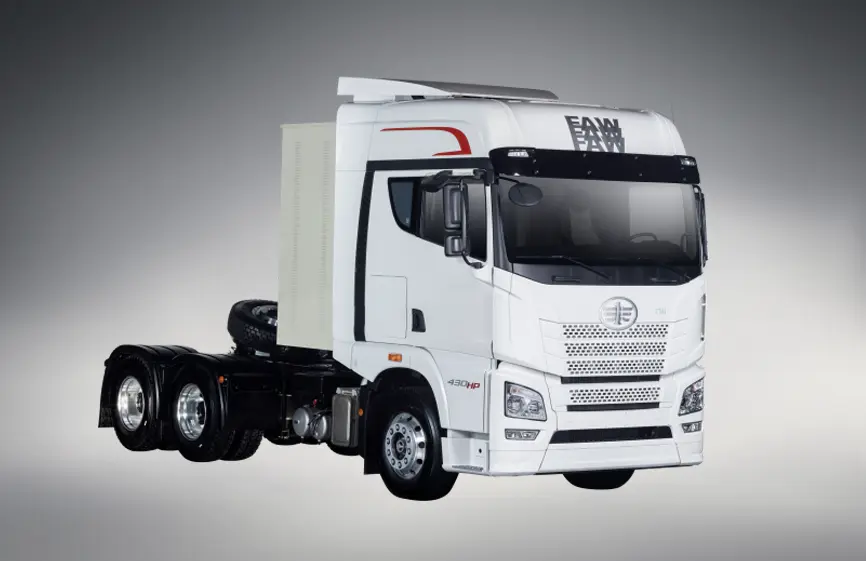
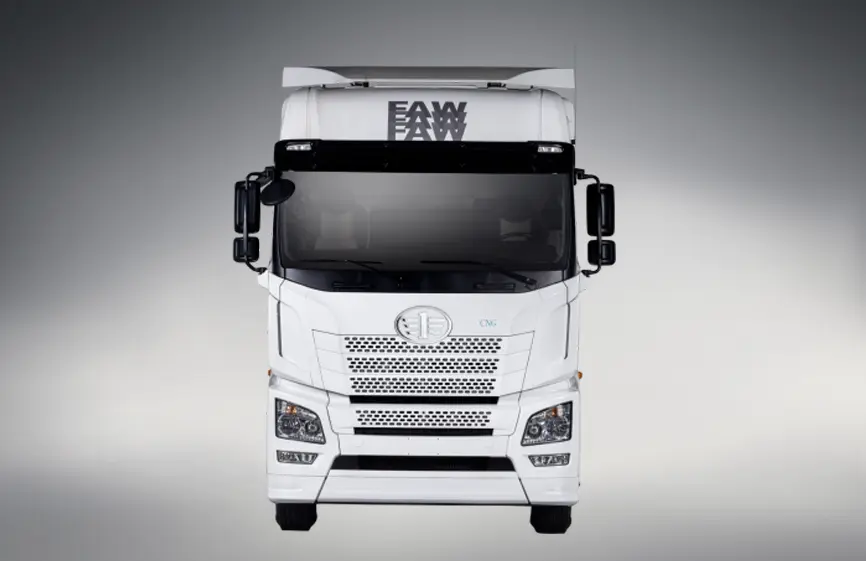
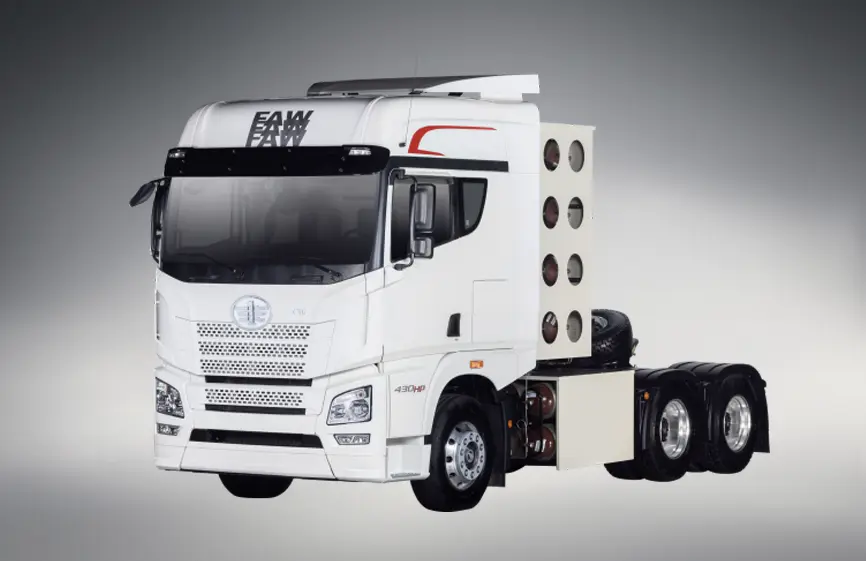
Uzbekistan’s geography makes long-haul tractor work a distinct use case from tipper operation. The JH6 is FAW’s heavy tractor platform, and in the Uzbek market it appears prominently in CNG (methane) configuration — a reflection of the country’s push to use domestic gas resources in commercial transport.
FAW JH6 4×2 CNG Tractor: Indicative Uzbek Market Configuration
| Parameter | JH6 4×2 CNG (methane) |
| Drive type | 4×2 tractor |
| Engine | Weichai WP13NG430E52, 6-cylinder gas engine |
| Max power | 430 hp |
| Emission standard | Euro 5 |
| Fuel | CNG (methane) |
| Indicative price | approximately 104,760–105,420 y.e. (USD-equivalent) |
Indicative pricing and configuration based on current Uzbek market listings for the JH6 4×2 CNG tractor. CNG and diesel variants exist; diesel JH6 configurations with the WP10H400E50 engine and 12-speed manual are also available.
The CNG configuration is the practical differentiator for Uzbekistan. Methane fuel costs are substantially lower than diesel per equivalent kilometer, and a 430 hp gas engine on a 4×2 tractor is sufficient for regional distribution and corridor hauling where gross combination weights are moderate. For operators running Tashkent–Samarkand–Bukhara or cross-border routes toward Kazakhstan, the fuel savings can justify the CNG premium within a predictable mileage band.
Diesel JH6 variants remain relevant for operators whose routes extend beyond reliable CNG refueling infrastructure. The WP10H400E50 diesel with a 12-speed manual is the conventional choice where gas station coverage cannot be guaranteed.
When the JH6 makes sense: Your work is tractor-trailer hauling rather than tipper operation, your routes are long-haul or regional, and you are prepared to evaluate CNG refueling access against diesel flexibility. The JH6 is not a substitute for the J6P in quarry or construction tipper work — the platforms are built for different load cases.
What Drives the Price of a FAW Truck in Uzbekistan
Sticker prices in Uzbekistan reflect more than the factory configuration. Three variables move the number most.
Local assembly versus import. Locally assembled models — particularly the Tiger V range — can avoid some import duty and logistics costs, and they come with local warranty execution through the dealer network. Imported heavy models carry shipping, customs, and certification costs that are embedded in the delivered price. For buyers comparing a locally available Tiger V against an imported light truck of similar specification, the effective cost of ownership often favors the locally supported model once parts lead times and downtime are counted.
Emission standard and fuel type. Euro 5 heavy trucks require AdBlue and low-sulfur diesel; Euro 3 light trucks are simpler but may face registration or operational restrictions depending on the region. CNG tractors carry a higher upfront cost than diesel equivalents but lower fuel cost per kilometer. The correct choice depends on annual mileage and refueling access, not just purchase price.
Body and hydraulic specification. A 26 m³ manganese steel tipper body on the J6P is a more expensive specification than a standard steel body, but it is the appropriate choice for abrasive aggregate. Similarly, hydraulic lifting geometry and cylinder specification affect both price and service life in quarry conditions.
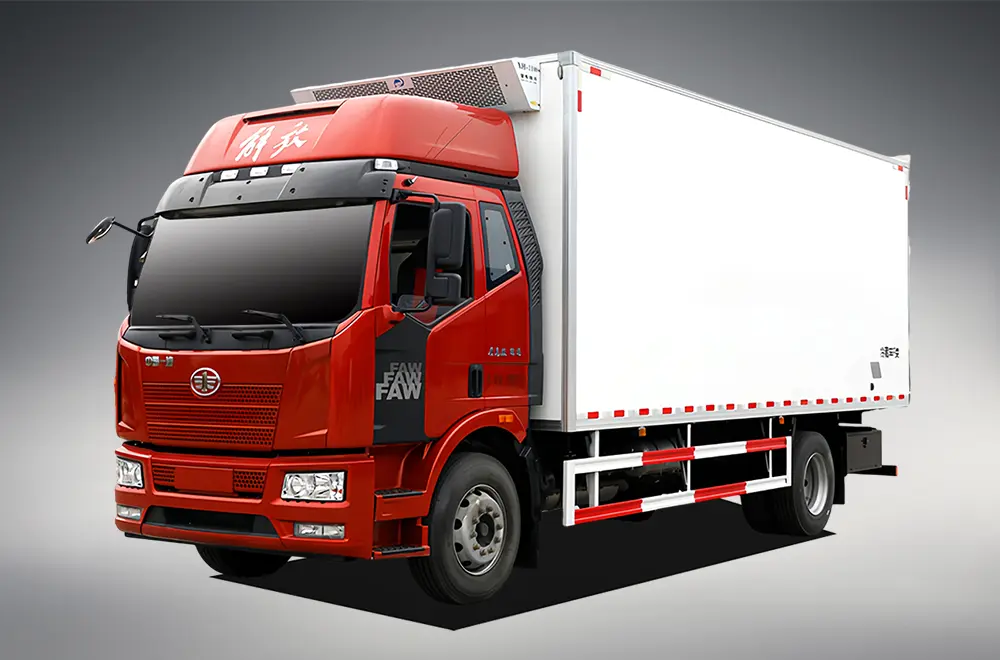
China Faw Jiefang J6p Refrigerated Truck

China Faw Jiefang J6p Refrigerated Truck
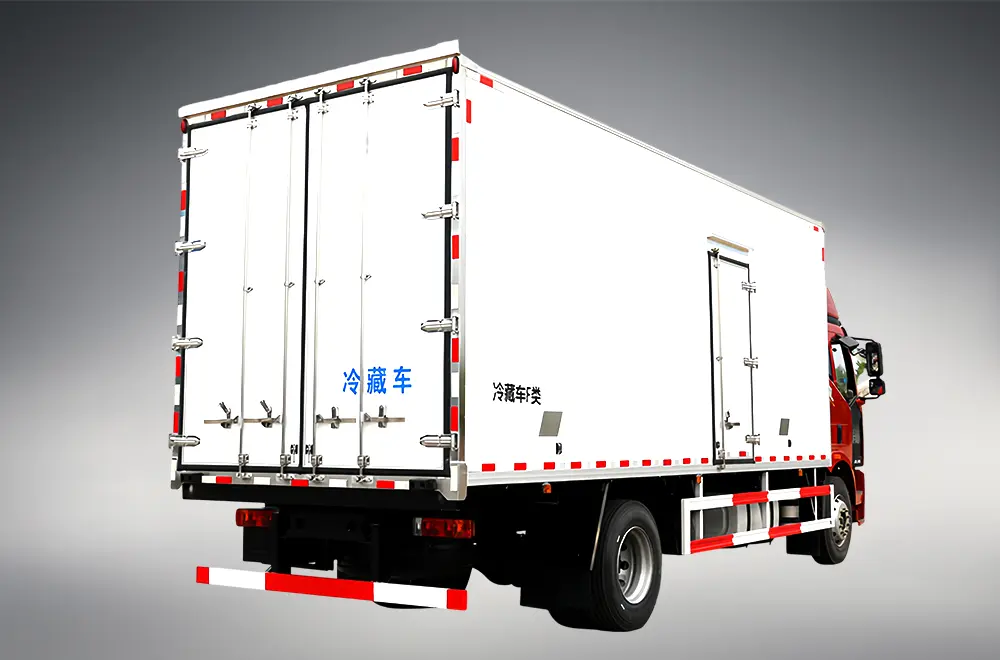
China Faw Jiefang J6p Refrigerated Truck
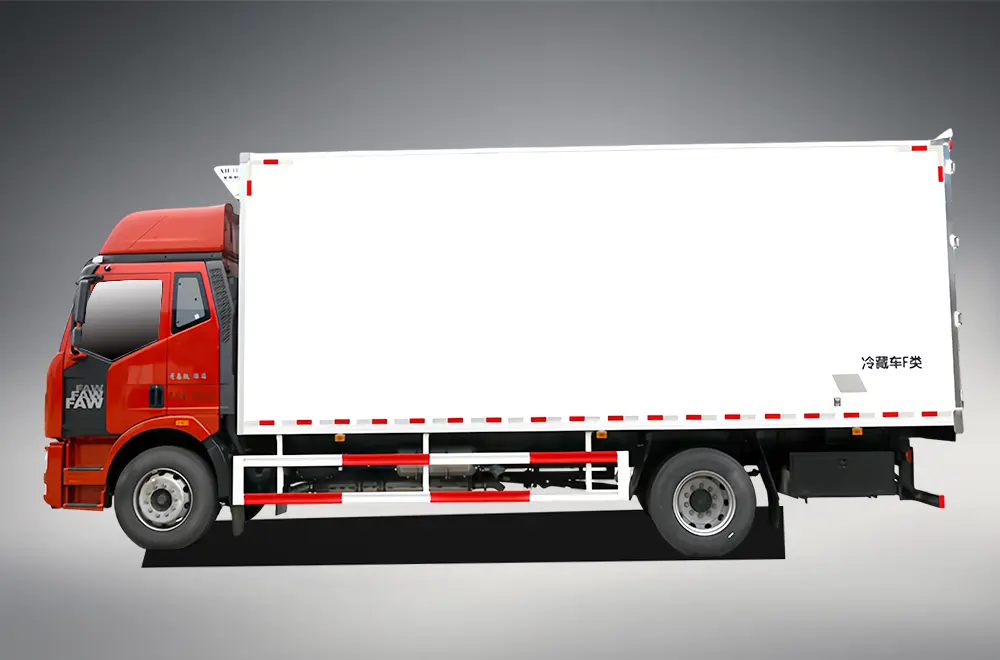
China Faw Jiefang J6p Refrigerated Truck
How to Choose the Right FAW Truck for an Uzbek Operation
The decision should start from the load, the route, and the service access, not the model name.
If the work is urban or regional distribution at 3–5 tons, the Tiger V tipper or chassis-cab variants are the appropriate platform. The Tiger VH dual-fuel option becomes relevant when methane refueling is accessible and annual mileage is high enough to recover the gas-system premium.
If the work is heavy tipper hauling at 25–31 tons, the J6P 8×4 with the 420 hp engine and 26 m³ body is the configuration documented for Uzbek mining and construction use. The 6×4 350 hp variant is the alternative where route geometry or tare weight makes the 8×4 less practical.
If the work is tractor-trailer hauling on regional corridors, the JH6 in CNG or diesel form is the relevant platform. The CNG variant should be evaluated against diesel on a total fuel cost per kilometer basis, including the refueling infrastructure available on the specific route.
For fleet buyers comparing configurations, the practical next step is to confirm local dealer stock or assembly lead time, warranty terms executed through the local network, and parts availability for the specific engine and transmission combination before committing to a body specification. A truck that matches the load but lacks local parts support carries a hidden downtime cost that can exceed the purchase price difference between models.
Contact our commercial vehicle export desk for a configuration-specific FAW truck quotation for the Uzbek market. We can match engine, drivetrain, body volume, fuel type, and emission standard to your hauling or distribution cycle, and provide a transparent comparison of locally assembled and imported configurations against your intended service life.
Models
📧 Email:[email protected]
📱 WhatsApp: +86-1886219929
🌐 Website: https://www.fawtruks.com
Faw Trucks | China Faw Jiefang Group